

Bridging the Gap in Emergency Communications


"Amateur Radio Operators play a critical role in MRES. Their advanced emergency communication abilities enhance the network's resilience and provide vital, reliable communications during real-world response situations and crises."


Amateur Radio Operator Participation
"MRS doesn’t aim to replace traditional amateur radio—it complements it. It fills the logistical and operational holes that analog and even digital systems can’t easily address, especially in modern organized response environments that demand speed, scale, and structure."
~ Mark Armstrong WB5VDG
Amateur Radio operators play a vital role within the MRES network. Your experience with emergency communications, public service, and disciplined radio procedures is invaluable. As an MRES volunteer, your unique skills are leveraged to create a more resilient and effective communication network. You can use the MRS platform as a powerful tool that complements your existing capabilities, providing a reliable, structured channel for real-time reporting during severe weather and other emergencies.

Amateur Radio Operators

Managed Radio Services (MRS) addresses several long-standing challenges and limitations found in traditional amateur radio operations by introducing a managed, LTE-based VOIP PTT model. MRS offers practical solutions and fills operational gaps in the emergency and auxiliary communication landscape:
Line of Sight Limitations
-
Traditional Challenge: UHF/VHF communications typically require line-of-sight or strong repeater infrastructure. Terrain, buildings, and weather can significantly degrade or block signals.
-
Solution: By using LTE networks, MRS radios bypass line-of-sight restrictions entirely. Operators can maintain clear communication across towns, counties, or even statewide, without dependence on local repeater coverage.
Geographic Range and Fragmented Coverage
-
Traditional Challenge: HF offers long-range potential but depends heavily on propagation conditions. VHF/UHF is confined to relatively short distances. Coverage is inconsistent and can vary hour to hour.
-
Solution: MRS provides nationwide reach wherever LTE coverage exists. This creates consistent, managed coverage for group members without reliance on variable propagation or complex antenna arrays.
Operational Structure
-
Traditional Challenge: Ad hoc nets or open repeaters may suffer from uncoordinated traffic, unclear leadership, and lack of discipline in emergency nets or group settings.
-
Solution: MRS networks are centrally provisioned and assigned, ensuring structured group communication. Each group operates with defined membership and purpose, supporting better control, accountability, and mission focus.
One-on-One and Task-Related Communication
-
Traditional Challenge: Most amateur systems are designed for open net communication. Side-channel or task-specific discussions often interfere with net control or require secondary frequencies.
-
Solution: MRS supports direct, private one-on-one messaging between members within a group. This is ideal for assignments, status checks, or sensitive discussions during coordinated events.
Event-Specific Scaleability
-
Traditional Challenge: Temporary operations (e.g., parades, weather response, community events) often require setting up temporary infrastructure or reprogramming radios quickly.
-
Solution: MRS enables “Stand-Up” Groups that can be activated on-demand within the existing LTE framework—no repeaters to configure or frequency coordination required.
Non-Licensed Participants
-
Traditional Challenge: Only FCC-licensed individuals can operate on amateur frequencies. This limits involvement from unlicensed but trained volunteers or support staff.
-
Solution: Because MRS operates over LTE and not amateur radio spectrums, non-licensed personnel can participate, provided they follow communication protocols. This increases operational flexibility during large-scale responses. LEARN MORE about The Novice Program
Equipment Complexity and Inconsistency
-
Traditional Challenge: Operators use a wide variety of gear—some poorly programmed or maintained—which can create interoperability headaches in the field.
-
Solution: MRS radios are centrally provisioned, configured, and updated, ensuring everyone on the network has compatible gear, identical programming, and a uniform user experience.
Managed Radio Services (MRS) transforms traditional amateur radio by leveraging LTE-based VoIP PTT to eliminate line-of-sight and range limitations, offering consistent nationwide communication through structured groups, private messaging, on-demand event support, and the inclusion of non-licensed personnel with consistent equipment.
In addition, MRS provides Amateur Radio Clubs with a private, dedicated communication channel ideal for routine activities. No need to manage a club repeater or worry about band conditions; our system offers reliable connectivity for all your members. LEARN MORE
Ready to expand your club membership beyond only licensed operators? The Novice Program is a powerful tool for growth. By offering this program, clubs can engage new members who are interested in radio but hesitant to take the licensing exam. LEARN MORE
Apply your amateur radio skills for a cause that matters. JOIN TODAY and help support public safety and emergency response efforts.

Weather Watcher / Spotter

Amateur Radio

Meteorologist
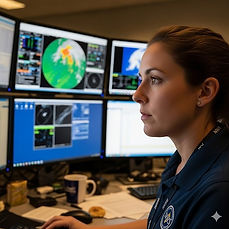
NWS / SKYWARN / CERT